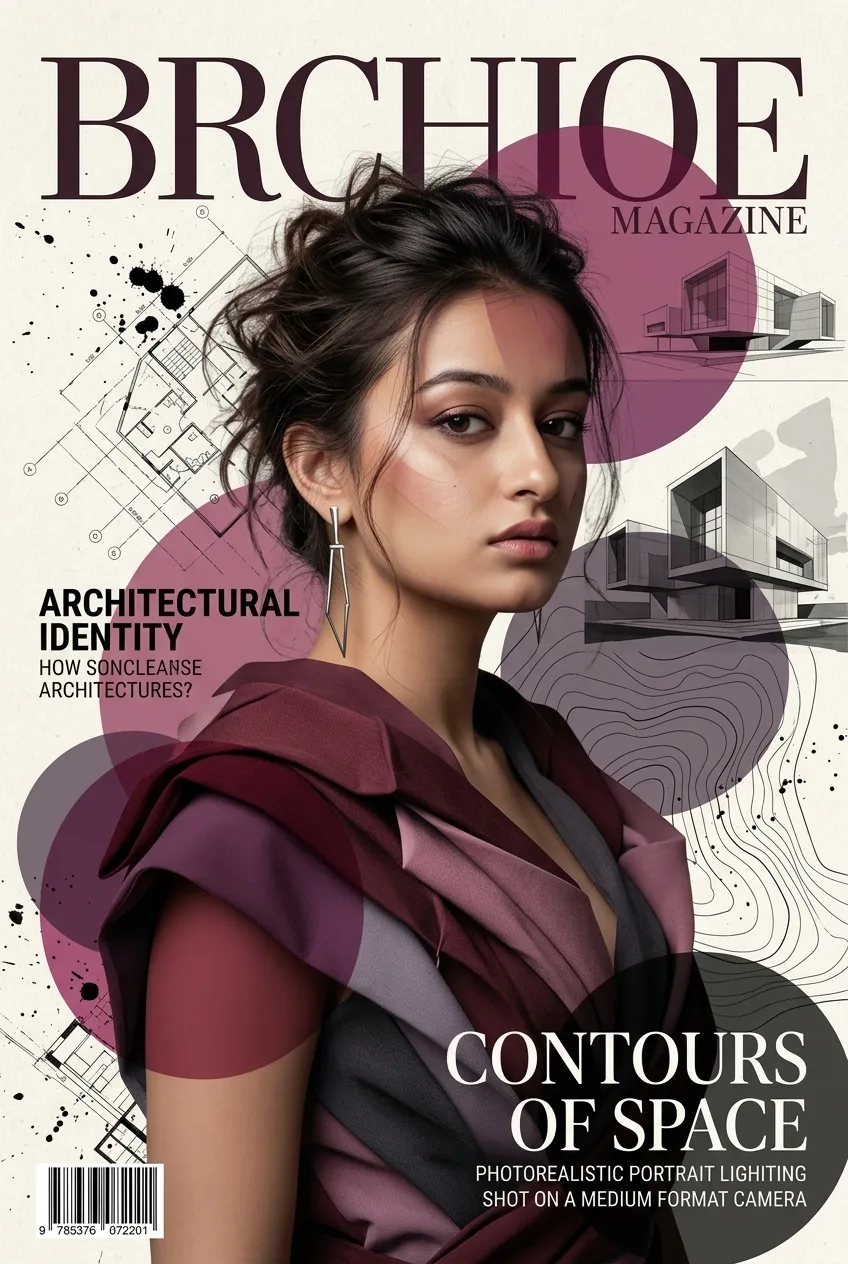
Architecture and Fashion Magazine Cover
Quelle: @rehman
Dieser Prompt erzeugt: Architecture and Fashion Magazine Cover.
Geeignetes Modell: ChatGPT.
Aus dem Prompt lässt sich festhalten: three-quarter.
Eine Variable, die du ändern kannst: 3D look.
So verwendest du diesen Prompt
- Modell: ChatGPT.
- Motiv: Architecture and Fashion Magazine Cover.
- Variable ändern: 3D look.
0 Aufrufe · 0 Kopien · 0 Favoriten · 0 Diskussionen
0Prompt
Heute noch 1 von 1 kostenlosen Kopien
Use the accompanying user photo as the only source of the subject’s identity and facial appearance. Preserve that person exactly and recognizably: their unique facial structure, proportions, face shape, forehead, eyebrows, natural eye shape, nose, lips, mouth structure, jawline, cheekbones, chin, skin tone and texture, hairline, and all distinctive features. Do not copy, blend with, or reinterpret the identity of the person in the reference image. Do not beautify, redesign, age-shift, gender-swap, or substitute the user’s identity. The user photo determines who the person is only; the reference image determines how they are posed, expressing themselves, styled, framed, and presented.
Create a vertical 2:3 editorial architecture-and-fashion magazine cover, closely matching the reference composition. Show the user’s identity in a dramatic chest-up to waist-up portrait occupying the central vertical axis, with the body angled slightly toward screen-left while the face is turned back toward the camera in a strong three-quarter view. The shoulders are wrapped in layered, sculptural burgundy, plum, mauve, and deep charcoal architectural fabric. The subject’s head sits slightly above the center of the frame, with the top of the hair approaching the upper third. Reproduce the reference head pose: a subtle backward tilt and slight rotation toward screen-right, exposing the contour of the jaw and neck. The expression is calm, serious, contemplative, and subtly enigmatic, never smiling; lips are softly parted with relaxed tension. The eyes are open and focused slightly off-center toward the viewer/camera, with an intense, self-possessed sideways-direct gaze matching the reference. Eyebrows remain naturally positioned with a quiet, thoughtful expression. Do not inherit the expression, gaze, or head angle from the user photo; transfer only the identity.
Give the subject a loose, slightly messy updo with textured strands, wisps, and flyaways around the forehead and temples, adapted naturally to the user’s own hair while preserving their identity. Add one long, elegant dangling earring with a simple round metallic disk. Clothing should resemble an avant-garde architectural fashion garment: layered folded panels, pleats, overlapping geometric shapes, and translucent-looking fabric forms in wine red, plum, dusty mauve, magenta, and charcoal-black, creating a sculptural collar and shoulder silhouette.
Construct the entire image as a sophisticated fictional architecture magazine cover. The background is an off-white, warm gray, lightly weathered paper field with faint grid lines, drafting marks, technical diagrams, contour-map lines, architectural plans, geometric construction lines, thin black rules, small dots, ink splatters, translucent circles, and overlapping editorial collage elements. Integrate several small modernist architectural building renderings and line drawings around the portrait, including a compact concrete-and-glass building near the upper-right side of the head and another geometric house structure around the lower center. Include subtle silhouettes of tropical palm trees and branching trees in the lower background.
Use large, elegant editorial typography as part of the composition: an oversized serif masthead spanning the top, with huge translucent/deep-plum letterforms partially obscured by and layered behind the subject’s head. Add smaller fictional architecture-themed cover lines distributed around the image, especially on the left and right margins and lower sections, using a mixture of clean condensed sans-serif and refined serif typography. Include phrases and fragments with the feel of “architectural design,” “identity,” “space,” “contours,” “heritage,” and “vision,” but keep all text secondary to the portrait and treat it as graphic magazine design rather than requiring perfectly readable wording. Add a small barcode-like graphic in the lower-left corner.
Layer translucent abstract shapes throughout the cover: large plum circles, mauve polygonal forms, magenta ink washes, smoky charcoal overlays, halftone-like textures, delicate topographic curves, fine architectural wireframes, and scattered black ink droplets. These overlays should interact with the subject without obscuring the user’s recognizable face. Place fine contour lines lightly across portions of the face and neck as a transparent graphic overlay, preserving clear visibility of the user’s features. Maintain the reference’s dense but highly controlled collage aesthetic, with strong vertical hierarchy and sophisticated negative space.
Lighting should be soft editorial portrait lighting, with gentle directional illumination from the front and slightly screen-right, creating smooth natural highlights on the forehead, nose bridge, cheeks, and lips, while preserving subtle shadow definition along the far side of the face and beneath the jaw. Keep skin realistic and naturally textured, with no plastic smoothing. The portrait should feel like a high-end fashion photograph integrated into a premium graphic-design collage. Use moderate depth of field: the face is sharply detailed while architectural and graphic background elements remain flatter, layered, and slightly softened where appropriate.
Camera perspective: close medium portrait, approximately chest/upper-torso framing, camera near eye level with a very slight upward or neutral perspective, approximately an 80–100mm portrait-lens feel with minimal facial distortion. Keep the subject large and dominant in the composition, but allow the graphic architecture, typography, and abstract forms to extend into all four edges.
Color palette: aged ivory and pale gray paper, black and charcoal linework, deep eggplant, plum, burgundy, wine red, dusty mauve, muted magenta, and occasional soft pink-violet accents. The overall mood is intellectual, elegant, experimental, architectural, contemporary, mysterious, and premium. Combine photorealistic portraiture with refined editorial collage, technical drafting aesthetics, fashion photography, ink textures, translucent overlays, and sophisticated magazine-cover art direction.
Priority rules: the user photo is the sole authority for identity and recognizable facial appearance; the reference image is the sole authority for expression, emotion, gaze, eye direction, head pose, body orientation, posture, styling, wardrobe, accessories, framing, camera perspective, composition, environment, graphic layout, lighting, color palette, and overall visual style. Preserve the user’s identity unmistakably while making that person behave and appear in the exact visual role of the reference subject.
Ähnliche Prompts
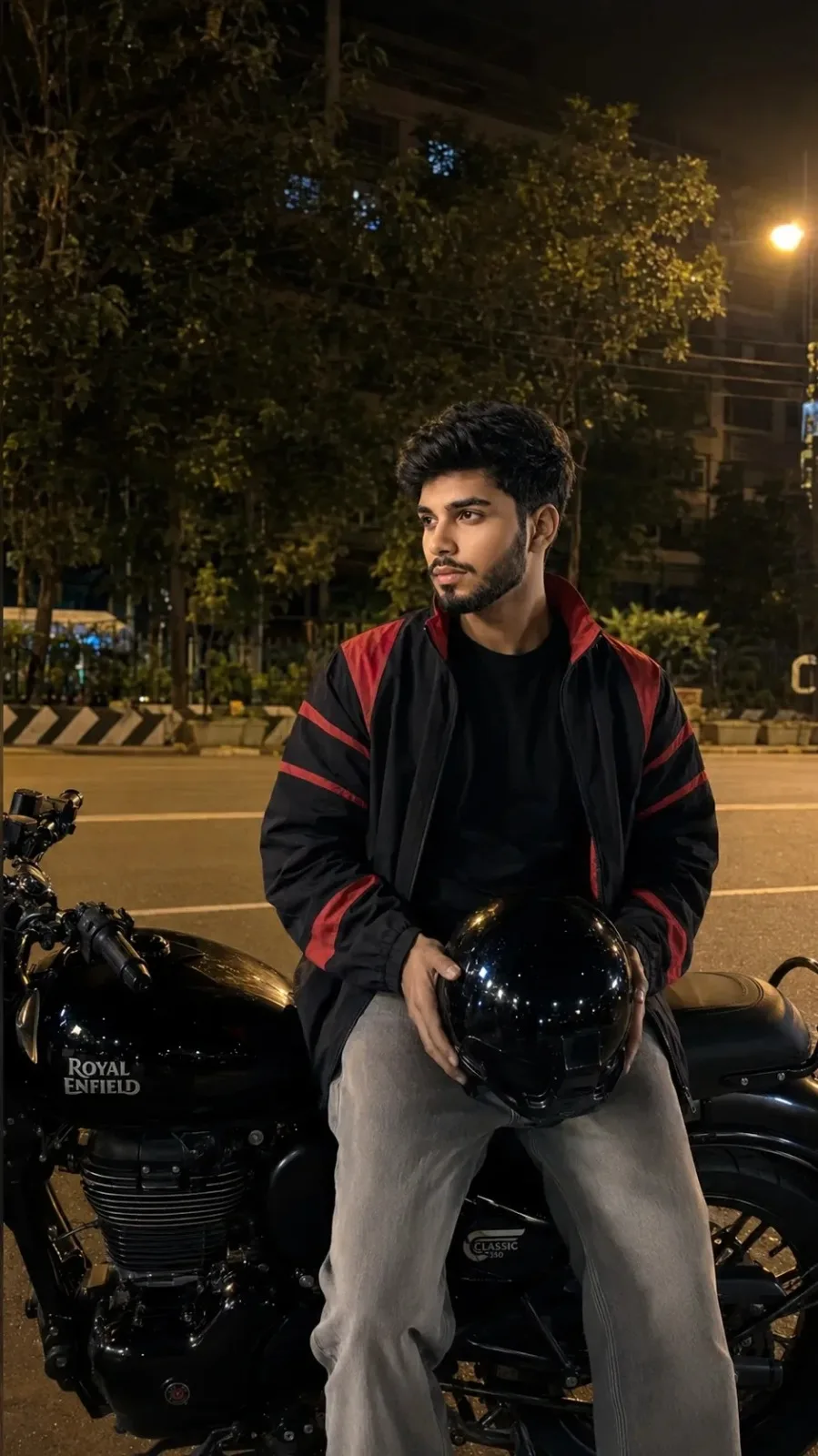
ROYAL Enfield CLASSIC PARKED ON A ROADSIDE AT NIGHT.
REALISTIC OUTDOOR NIGHTTIME HANDHELD SMARTPHONE ,HE IS SITTING SIDEWAYS ON A BLACK ROYAL Enfield CLASSIC PARKED ON A ROADSIDE AT NIGHT,
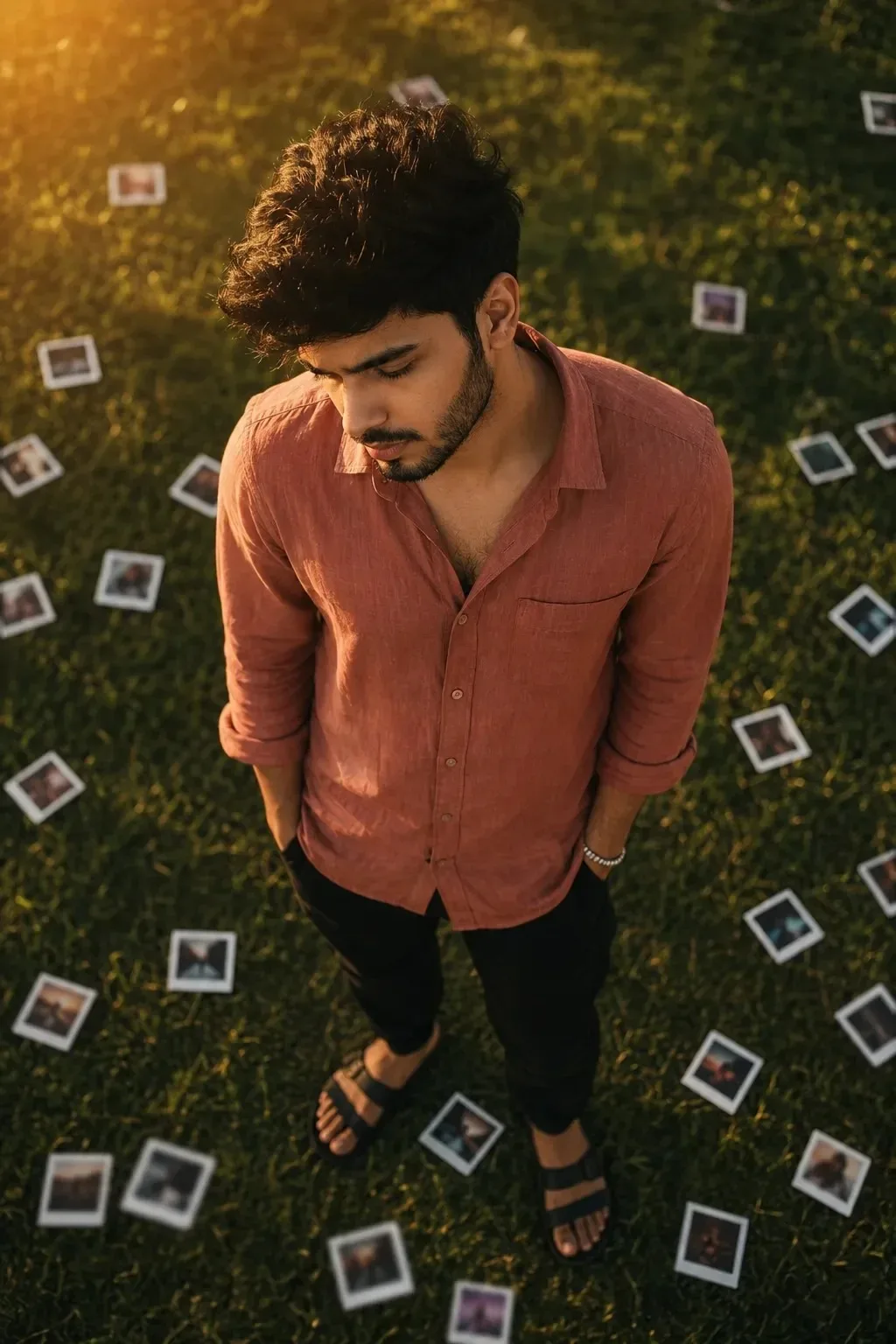
Polaroid photos scattered all around him on grass.
Hyper-realistic 8K photography, 4:6 vertical.
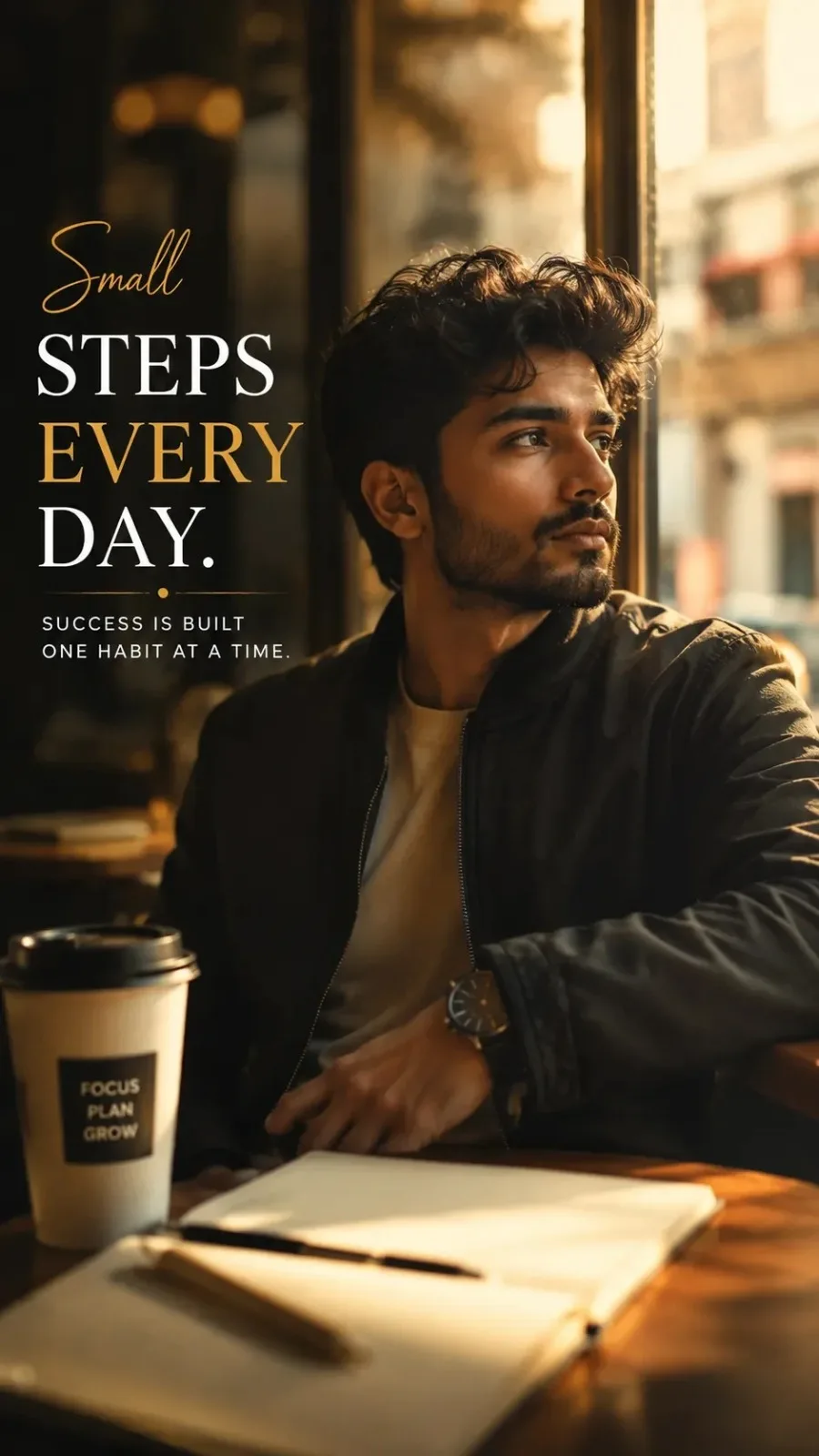
Ultra-realistic portrait of a stylish.
Ultra-realistic portrait of a stylish young man sitting beside a café window, warm morning sunlight, thoughtful expression, blurred city
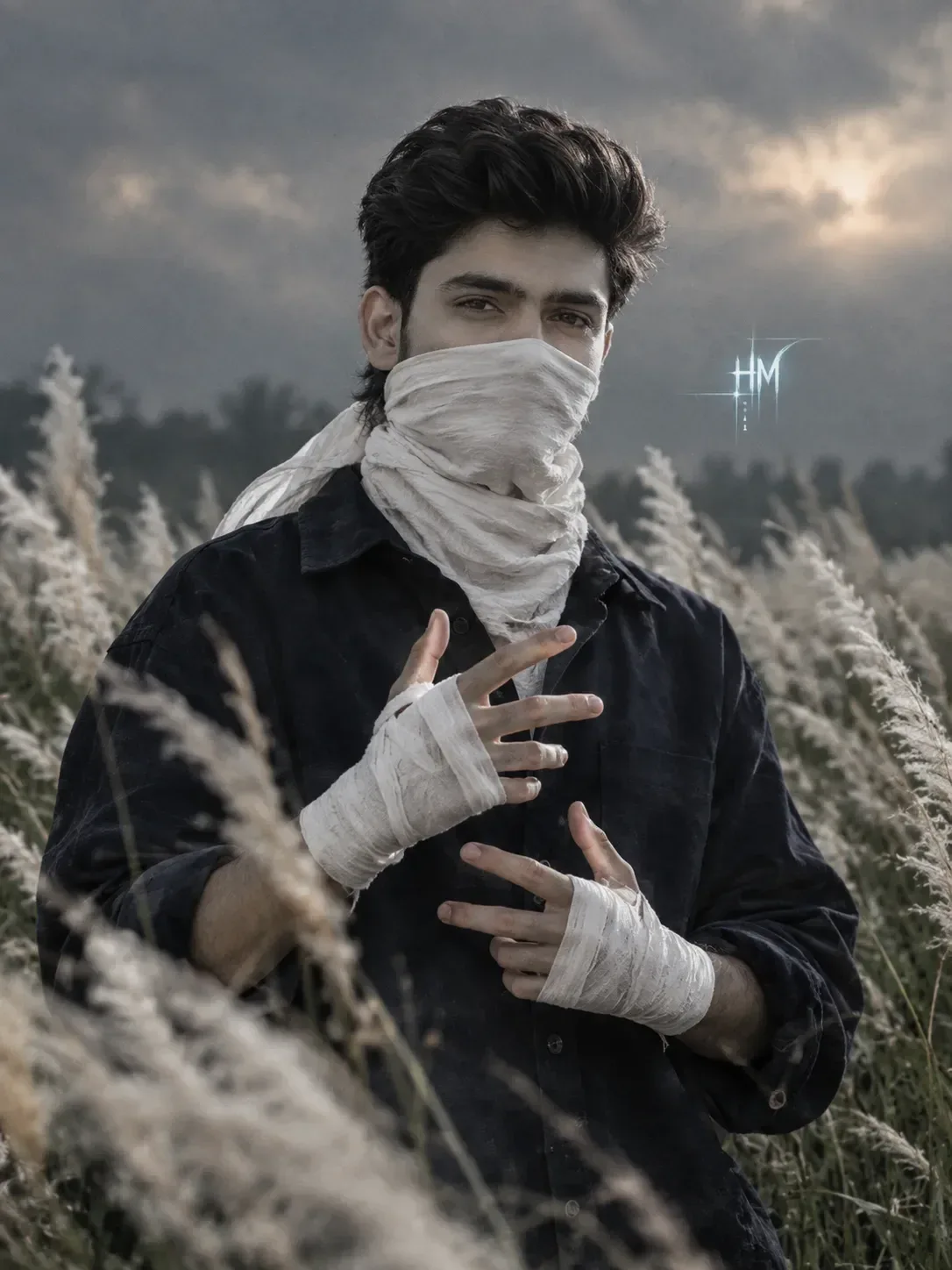
Boy in kans grass field
cinematic, dramatic medium shot of a boy in his 18 year old slim body standing amidst a dense field of tall white kans grass (kash phool).
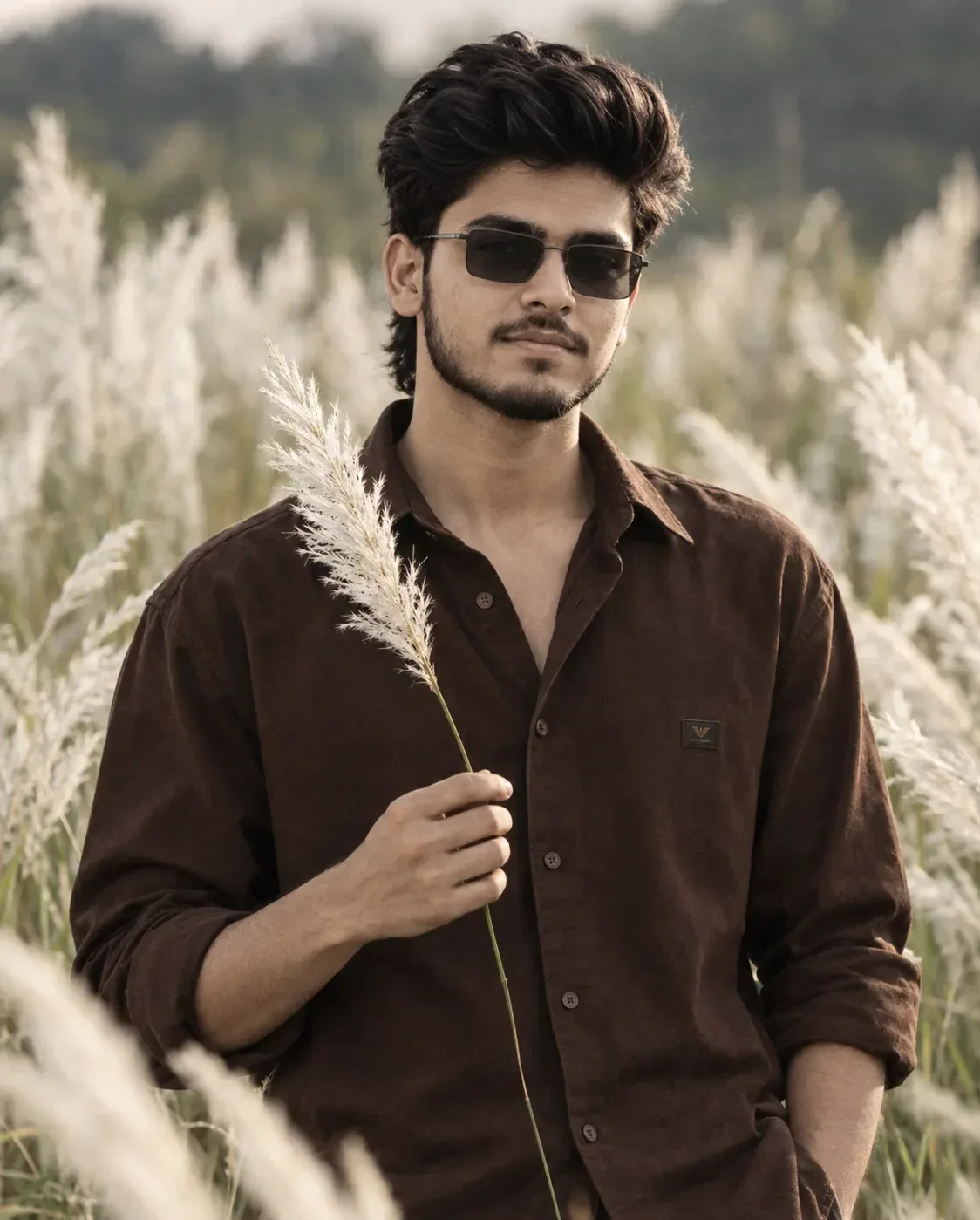
Cinematic South Asian boy portrait
Ultra-realistic cinematic half-body portrait of a South Asian boy in his 18 year old slim body standing in a middle of lush white Kans
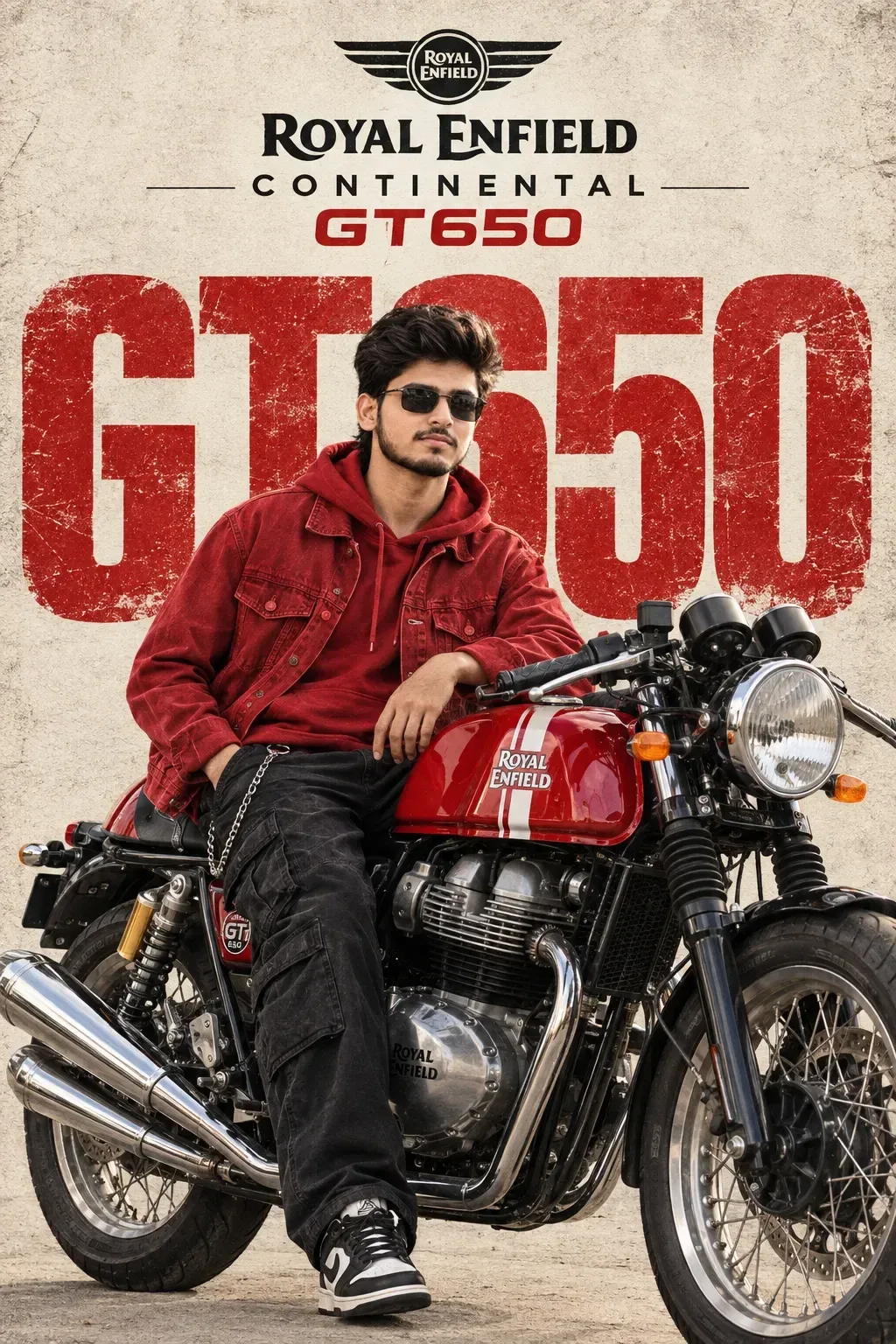
Vintage Motorcycle Poster
"A photorealistic, vintage-style advertising poster featuring a stylish boy in his 18 year old slim body sitting confidently on a red and
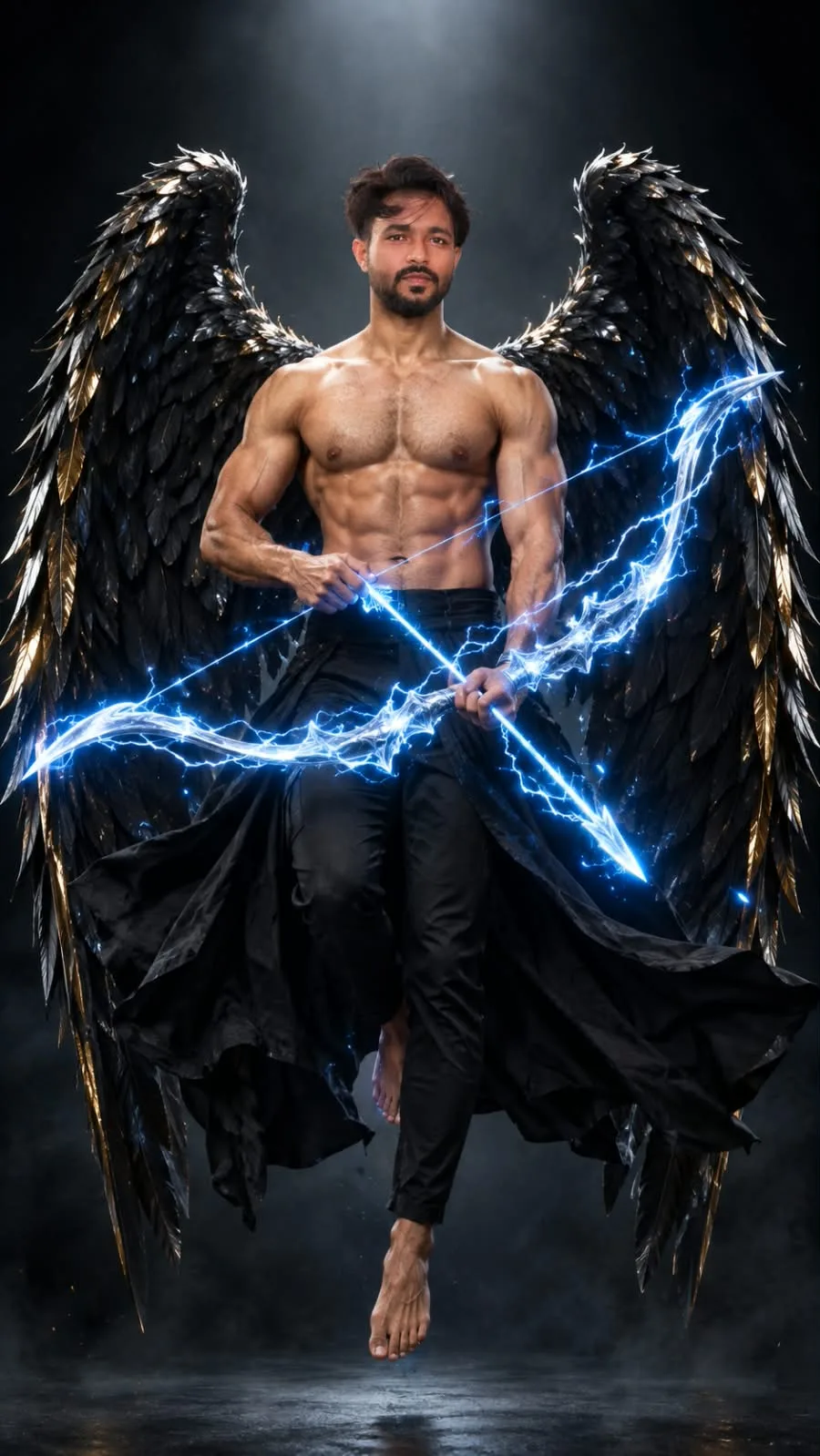
Dark angle
Create an ultra-photorealistic 4K UHD cinematic fantasy portrait, vertical 9:16, inspired closely by the uploaded reference image’s
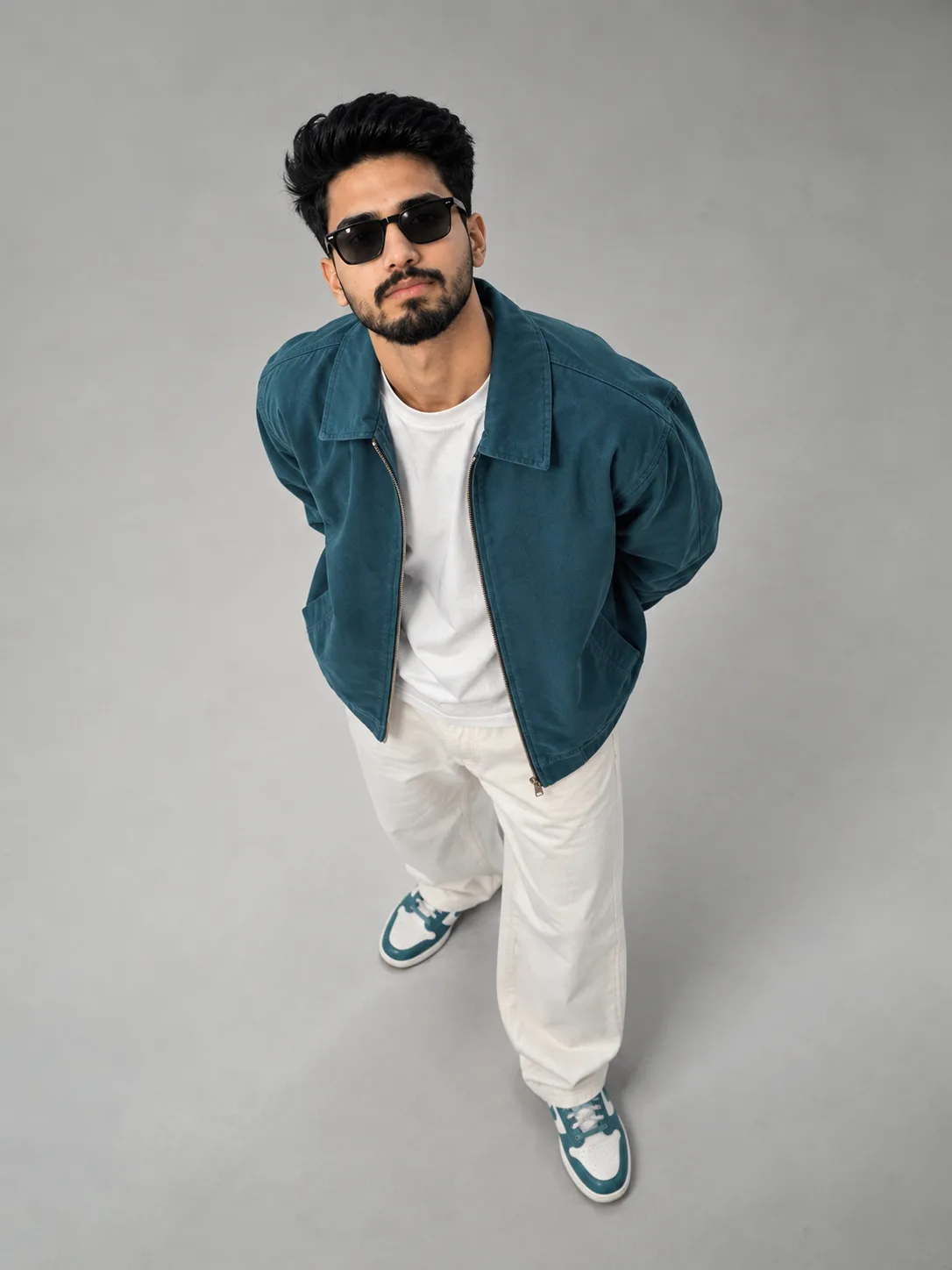
Stylish Top-down Angle Fashion Portrait
Create a hyper-realistic fashion editorial por-trait using my uploaded face reference.

Digital Marketing Made Easy for Gen Z
Create a modern, eye-catching Gen Z digital marketing social-media poster in a clean editorial style.
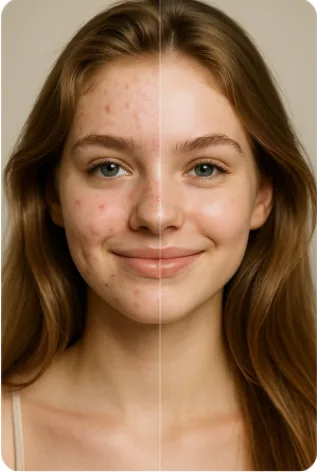
Natural Skin Restoration — Before & After
Create a highly realistic before-and-after facial skin restoration portrait using the uploaded image as the exact reference.
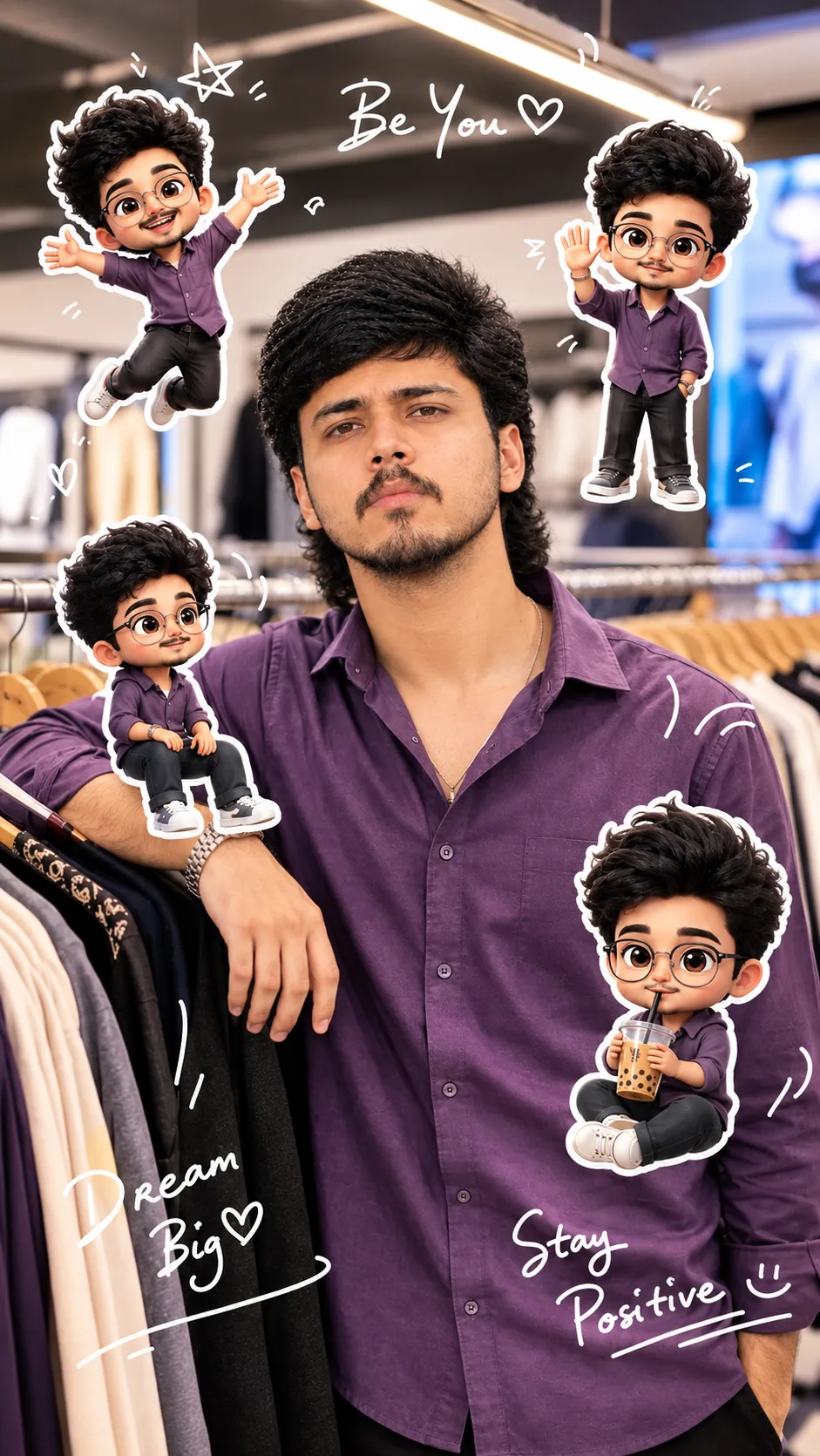
Be You – Dream Big, Stay Positive
Create a stylish ultra-realistic fashion portrait with playful 3D cartoon elements, inspired by the uploaded reference image.
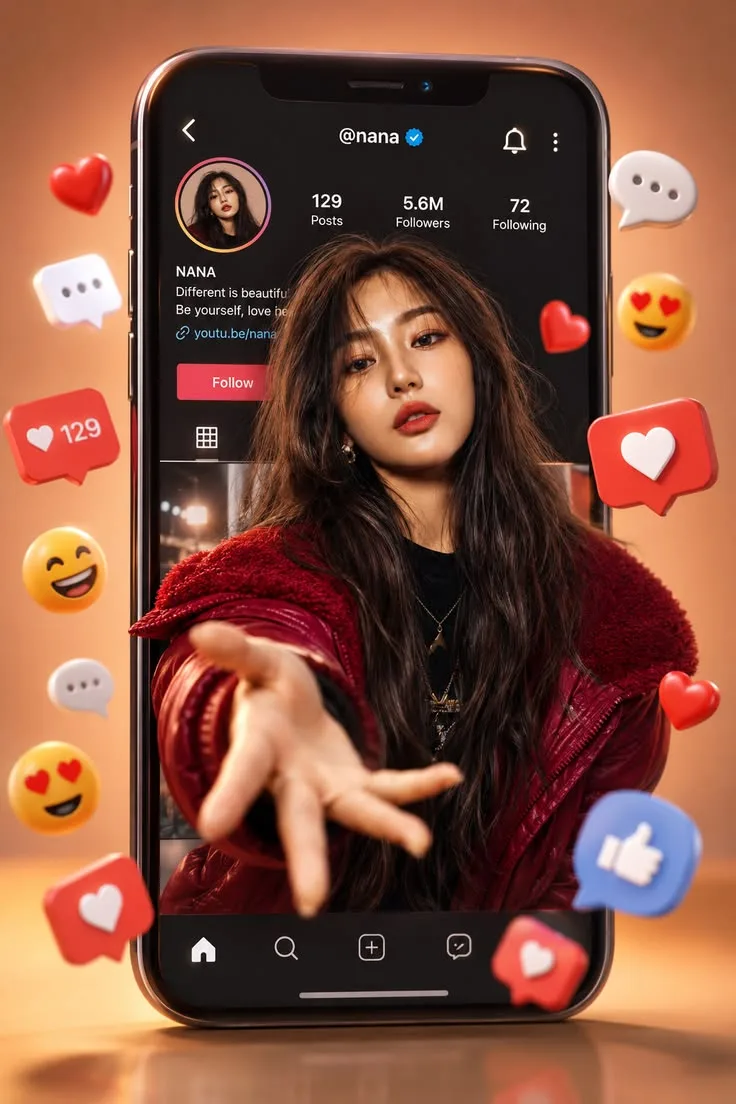
Social Media Star – Viral Instagram 3D Portrait
Use the uploaded image as the visual reference for the overall composition, pose, lighting, and 3D social-media concept.