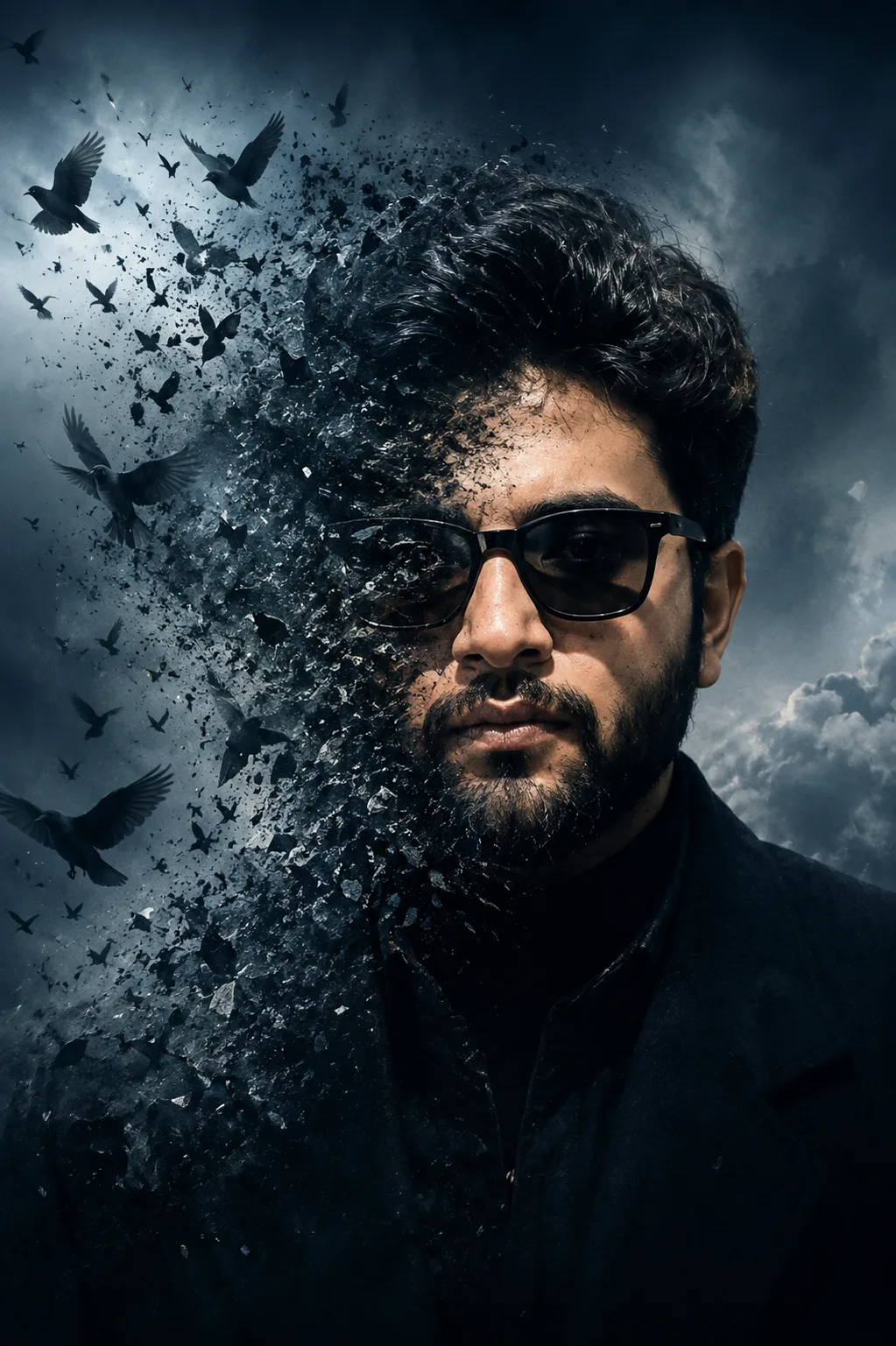
Disintegrating Man Amidst Storm of Birds
Source: @rehman
This prompt generates Disintegrating Man Amidst Storm of Birds.
It is written for ChatGPT.
The prompt specifies 100mm.
One variable you can change is 3D look.
How to use this prompt
- Model: ChatGPT.
- Subject: Disintegrating Man Amidst Storm of Birds.
- Change 3D look.
0 views · 0 copies · 0 favorites · 0 discussing
0Prompt
1 of 1 free copies left today
Use the uploaded user photo as the ONLY and STRICT source of the human subject’s identity and facial appearance. Preserve the exact recognizable person from the user photo with maximum fidelity: facial structure, facial proportions, face shape, forehead, eyebrows, natural eye shape, nose, lips, mouth structure, jawline, cheekbones, chin, skin tone, natural skin texture, hairline, facial characteristics, and any distinctive features. Do NOT copy the identity of the reference subject. Do NOT redesign, beautify, slim, masculinize, feminize, age, de-age, or otherwise alter the user’s identity. The final person must unmistakably remain the same individual from the uploaded user photo. The reference image controls everything except identity: recreate its composition, expression, gaze, head position, pose, clothing, lighting, environment, color palette, atmosphere, visual effects, and artistic treatment.
Create an ultra-realistic cinematic fine-art portrait inspired precisely by the supplied reference composition. Frame the subject as a tight vertical head-and-shoulders portrait, occupying almost the entire image. The camera is positioned directly in front of the subject at approximately eye level, with a straight-on frontal perspective and minimal perspective distortion, resembling a high-quality portrait photograph captured with an approximately 70–100mm portrait lens. The face is centered slightly toward the right half of the frame, while the left half of the head and upper body transitions dramatically into a cloud of dark particles, dust, smoke, fragments, and flying birds. Maintain the same visual balance as the reference: approximately the right half of the person remains completely solid and photorealistic, while the left side progressively disintegrates outward into the surrounding atmosphere.
Reconstruct the reference facial behavior exactly using the user’s identity. The subject has a calm, serious, emotionally restrained, slightly melancholic expression. The mouth is closed with naturally relaxed lips and no smile. The eyebrows remain naturally composed and subtly serious. The eyes are open and directed straight toward the camera/viewer, creating a quiet, intense, contemplative gaze. Do NOT use the expression, gaze direction, or head pose from the user’s source photograph; use only the identity from that photo and reconstruct the reference expression. Keep both eyes aligned naturally toward the camera. The head is upright and nearly perfectly frontal, with only an extremely subtle natural angle, no dramatic tilt, no looking upward or downward, and no profile.
Recreate the hair according to the visual behavior of the reference while preserving the user’s recognizable hair characteristics where appropriate. Give the subject naturally voluminous, slightly messy, wind-swept hair with individual strands visible, flowing subtly toward the upper-right and outward as if moved by a gentle breeze. Preserve the user’s natural hairline, texture, density, and characteristic appearance rather than replacing them with another person’s hairstyle. Hair should blend naturally into the surrounding particle effect on the left side.
Dress the subject in a simple dark, nearly black structured jacket or dark collared outerwear similar in visual weight to the reference. Keep the clothing understated so the face remains the dominant focal point. No prominent accessories, jewelry, logos, writing, or distracting details unless they are essential to preserving something visible from the user’s identity.
The defining artistic effect is a highly detailed disintegration transformation beginning around the left side of the head, forehead, cheek, jaw, and shoulder. The left portion of the subject should appear to dissolve organically into thousands of tiny dark blue-gray particles, ash-like fragments, dust, smoke, cracked textures, and photographic debris. The transition must be gradual and believable: the intact facial features on the right remain sharply defined, while the left side breaks apart progressively from solid skin and hair into translucent fragments and atmospheric particles. Do not create a clean vertical split. Make the boundary irregular, organic, fragmented, smoky, and naturally integrated with the anatomy. Some facial and hair fragments should remain recognizable near the transition before becoming smaller particles farther outward.
Within the disintegrating left side, incorporate numerous birds in flight, primarily dark silhouettes resembling pigeons or small crows, emerging from the dissolving particles. Include a mixture of tiny distant birds and several larger, clearly recognizable birds in the foreground. Birds should fly primarily toward the upper-left and left side of the frame, with varied wing positions and natural spacing. Some birds should appear partially formed from particles, creating the impression that the person is transforming into a flock of birds. Keep the birds integrated into the dust and fragmentation rather than looking pasted onto the image.
The background should reproduce the reference’s atmospheric cinematic environment: a cool desaturated blue-gray sky with soft layers of mist, smoke, and cloudy haze. The upper and right background should be relatively smooth and subdued, while the left side becomes more textured due to the disintegration effect and flying birds. Add subtle storm-cloud formations and atmospheric depth behind the subject, especially toward the lower-right and far background. Avoid recognizable buildings, landscapes, scenery, or objects. The background should feel vast, moody, mysterious, slightly surreal, and emotionally quiet.
Use a restrained cold color palette dominated by charcoal black, slate blue, desaturated teal, gray, muted blue-green, and natural skin tones. The intact face should retain realistic skin coloration with subtle cool cinematic grading. Preserve pores, fine facial texture, natural imperfections, realistic tonal variation, and believable skin detail. Avoid plastic skin, excessive smoothing, artificial beauty retouching, or an overly glossy appearance.
Lighting should closely match the reference: soft but dramatic directional illumination from the front-right side, gently illuminating the intact half of the face while allowing the dissolving side to become darker and more atmospheric. Create subtle chiaroscuro across the face, with realistic shadows around the nose, cheek, jaw, eye socket, and neck. The right side of the face should remain crisp and luminous enough to reveal detailed skin texture, while the left side gradually merges into darker blue-gray smoke and particulate debris. Add delicate rim light along selected hair strands and outer contours where appropriate. Maintain natural photographic lighting rather than an artificial studio look.
Use extremely high detail and photorealistic rendering. The intact eye, eyelashes, eyebrows, lips, nose, cheekbones, skin pores, hair strands, and facial contours must be sharply resolved and anatomically correct. The particle field should contain thousands of individually readable fragments at different scales, with realistic depth, translucency, motion, and atmospheric scattering. Include subtle depth-of-field: the primary intact facial features remain highly sharp, while distant particles, birds, and background clouds gradually soften with distance. Preserve realistic lens rendering and cinematic tonal roll-off.
Composition must remain very close to the reference: vertical portrait orientation, tight crop from approximately the upper chest/shoulders to the top of the hair, face dominating the center-right, disintegration occupying the left half, several birds extending toward the far left edge, and atmospheric negative space around the upper-right and right background. Do not zoom out into a full-body image. Do not change the portrait into a landscape composition. Maintain the same visual hierarchy and approximate proportions as the reference.
Create a premium cinematic editorial/fine-art photography aesthetic combining realistic portrait photography with sophisticated surreal disintegration effects. The result should feel emotionally powerful, mysterious, elegant, haunting, and poetic rather than horror-oriented. The transformation should look physically integrated with the person, as if the subject is naturally dissolving into wind, smoke, dust, and birds.
STRICT IDENTITY RULE: the user’s uploaded photo determines WHO the person is; the reference determines HOW the person is posed and expressed. Preserve the user’s exact identity even if their gender, age, facial structure, hairstyle, or appearance differs from the reference. Never transform the user into the reference person. Reconstruct the reference’s frontal head position, serious emotion, closed-mouth expression, direct camera gaze, tight head-and-shoulders framing, clothing treatment, disintegration pattern, bird placement, lighting, atmosphere, color grading, and overall composition around the user’s actual identity.
Remove all text, typography, letters, logos, signatures, watermarks, captions, borders, and graphic overlays from the final image. No readable text anywhere. No extra people. No duplicated face. No distorted anatomy. No asymmetrical or misplaced eyes. No malformed facial features. No artificial smile. No exaggerated expression. No cartoon, anime, illustration, plastic skin, oversmoothing, excessive HDR, or low-detail rendering.
Final output: an ultra-photorealistic, high-resolution cinematic vertical portrait with the user’s exact identity preserved, direct intense gaze, restrained serious emotion, frontal head pose, dark clothing, dramatic right-side illumination, cool stormy blue-gray atmosphere, and the left half of the subject organically dissolving into dense particles, smoke, fragments, and a flock of flying birds, matching the supplied reference image’s composition and visual impact as closely as possible.
Similar prompts
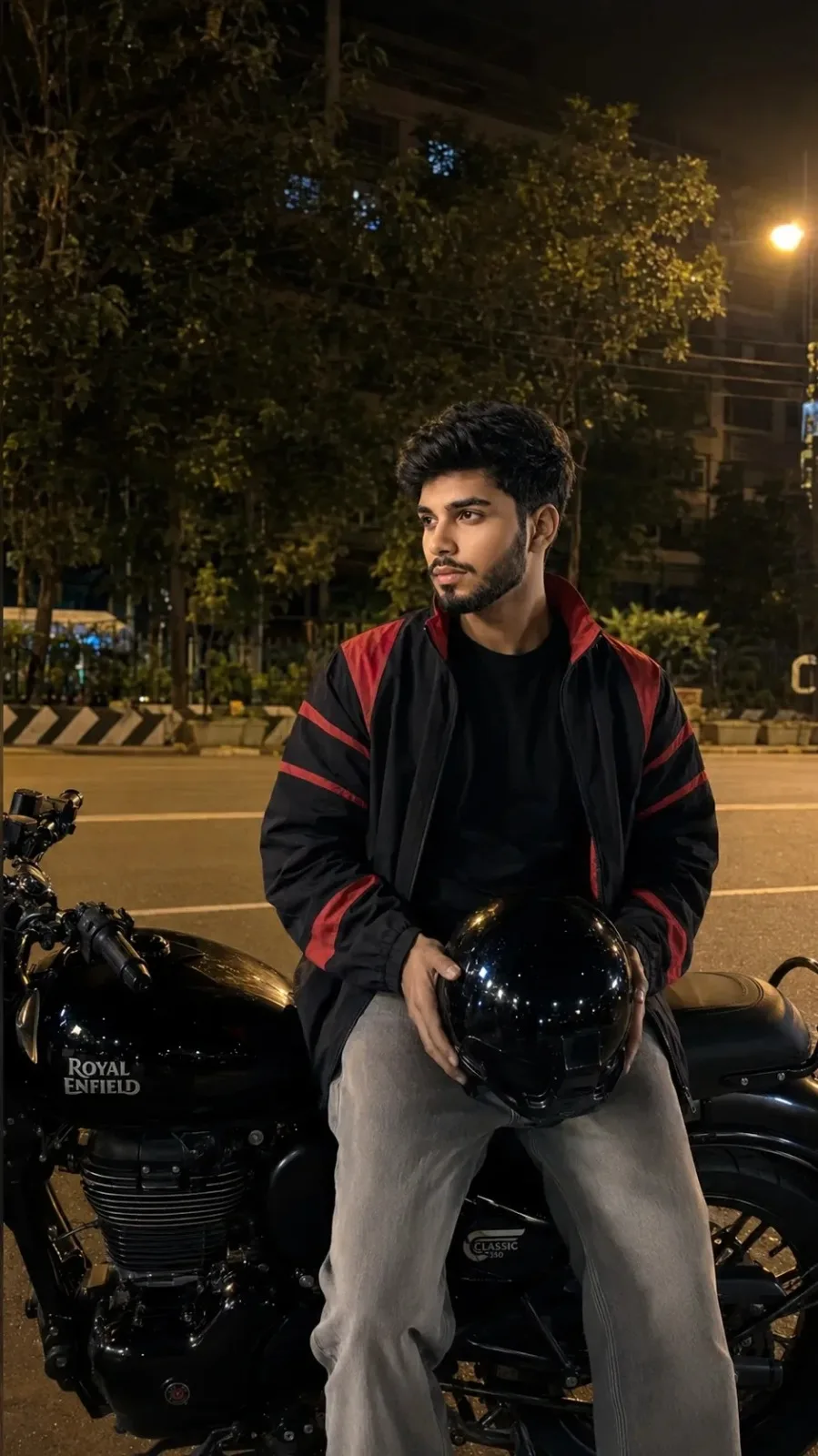
ROYAL Enfield CLASSIC PARKED ON A ROADSIDE AT NIGHT.
REALISTIC OUTDOOR NIGHTTIME HANDHELD SMARTPHONE ,HE IS SITTING SIDEWAYS ON A BLACK ROYAL Enfield CLASSIC PARKED ON A ROADSIDE AT NIGHT,
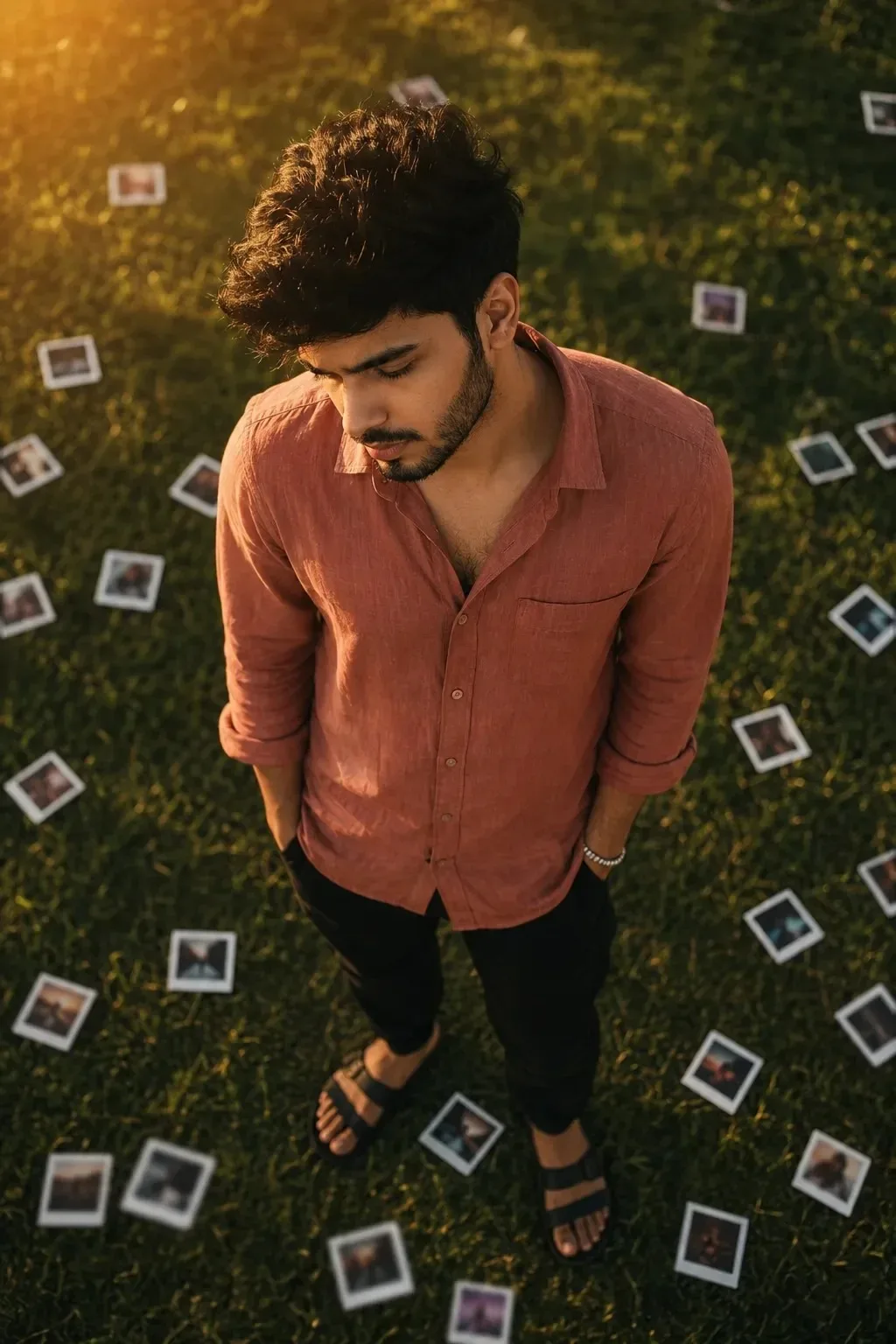
Polaroid photos scattered all around him on grass.
Hyper-realistic 8K photography, 4:6 vertical.
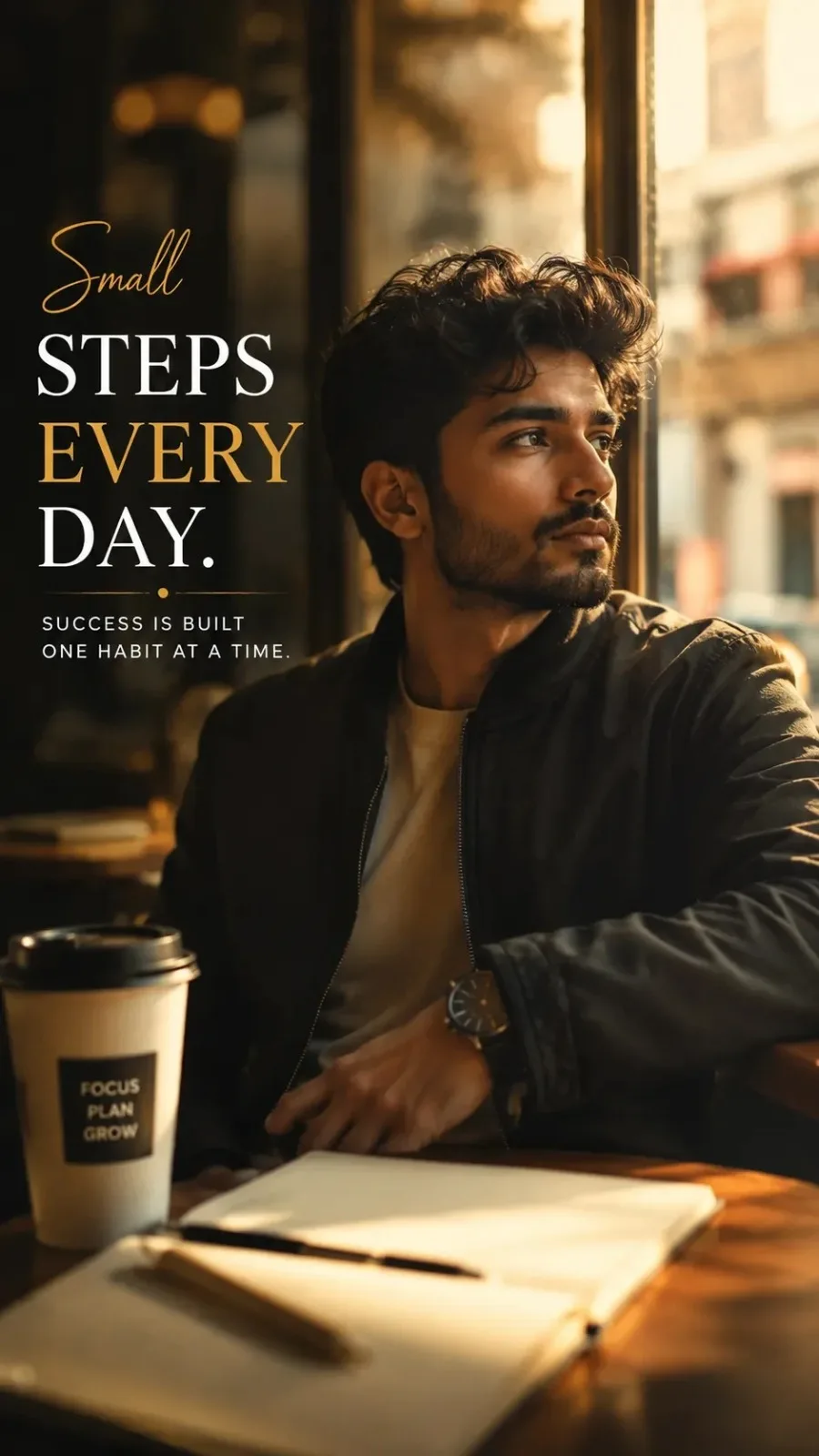
Ultra-realistic portrait of a stylish.
Ultra-realistic portrait of a stylish young man sitting beside a café window, warm morning sunlight, thoughtful expression, blurred city
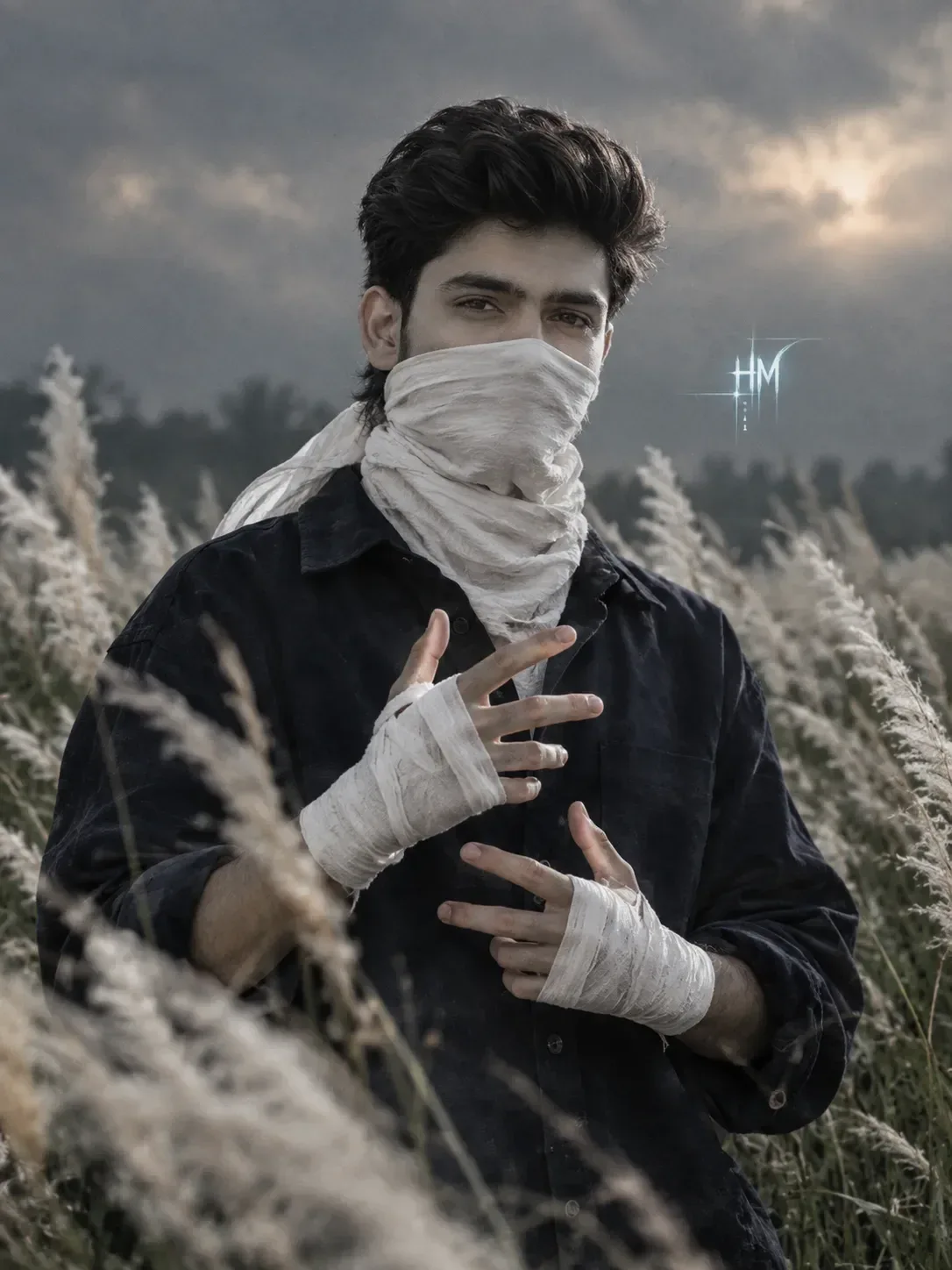
Boy in kans grass field
cinematic, dramatic medium shot of a boy in his 18 year old slim body standing amidst a dense field of tall white kans grass (kash phool).
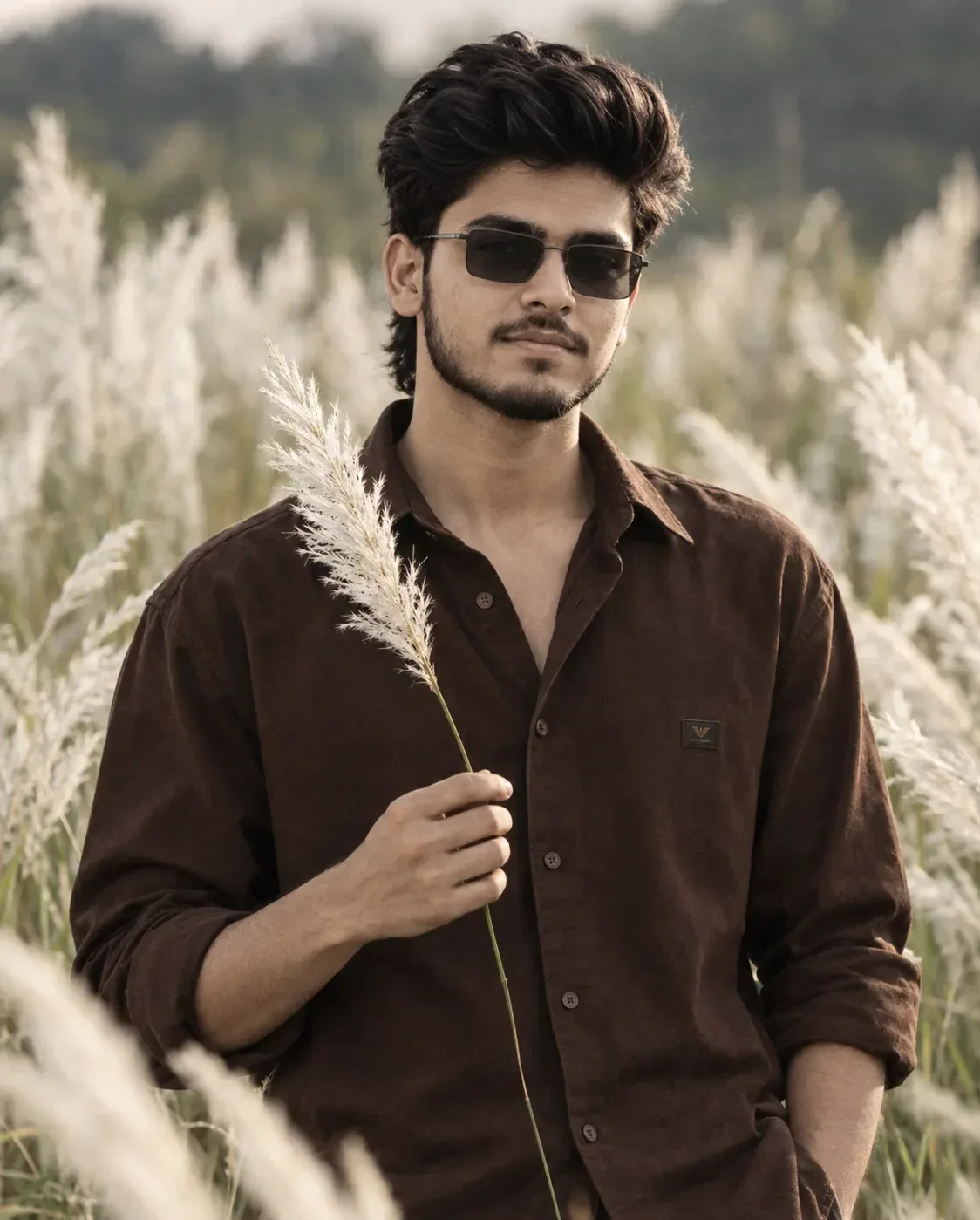
Cinematic South Asian boy portrait
Ultra-realistic cinematic half-body portrait of a South Asian boy in his 18 year old slim body standing in a middle of lush white Kans
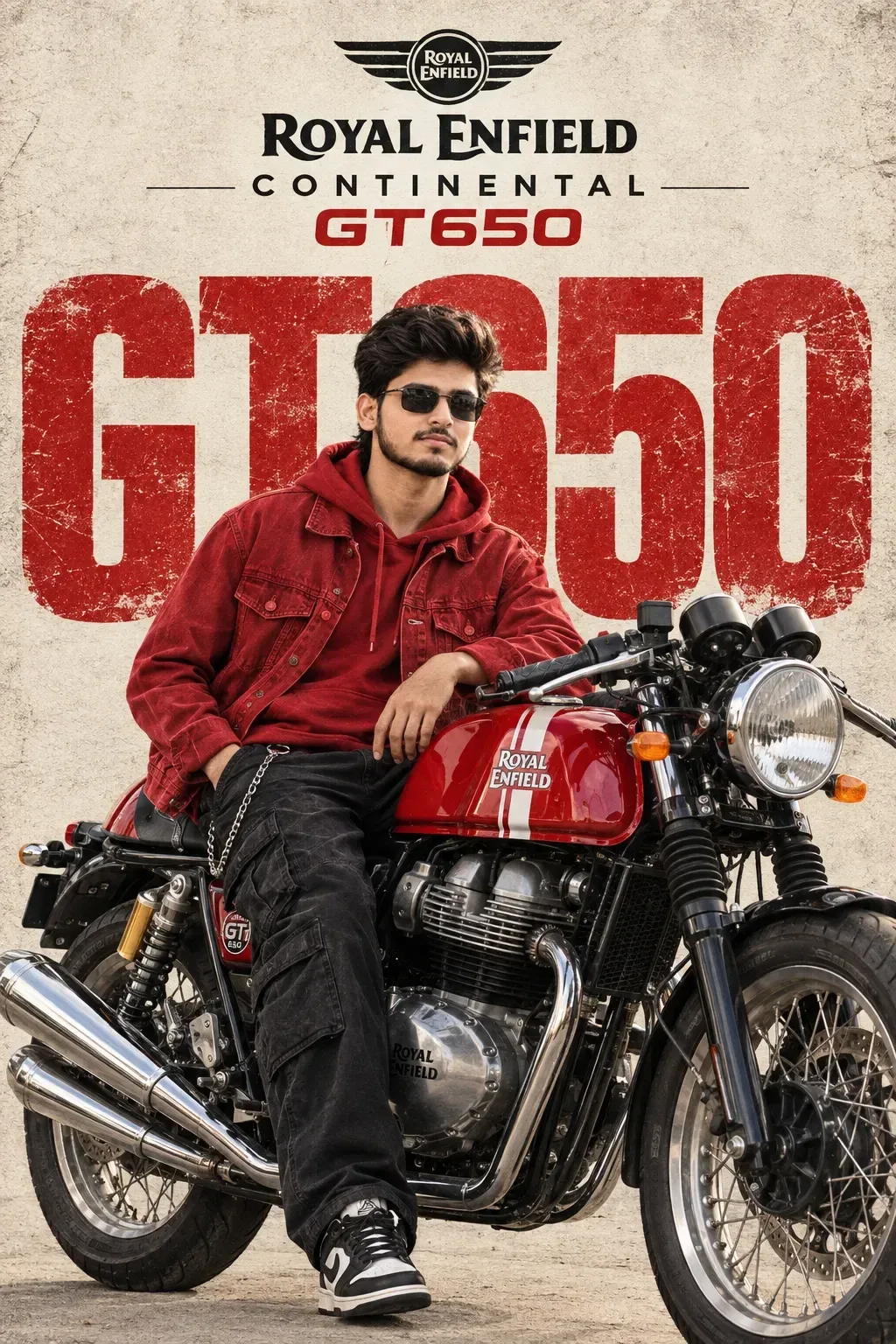
Vintage Motorcycle Poster
"A photorealistic, vintage-style advertising poster featuring a stylish boy in his 18 year old slim body sitting confidently on a red and
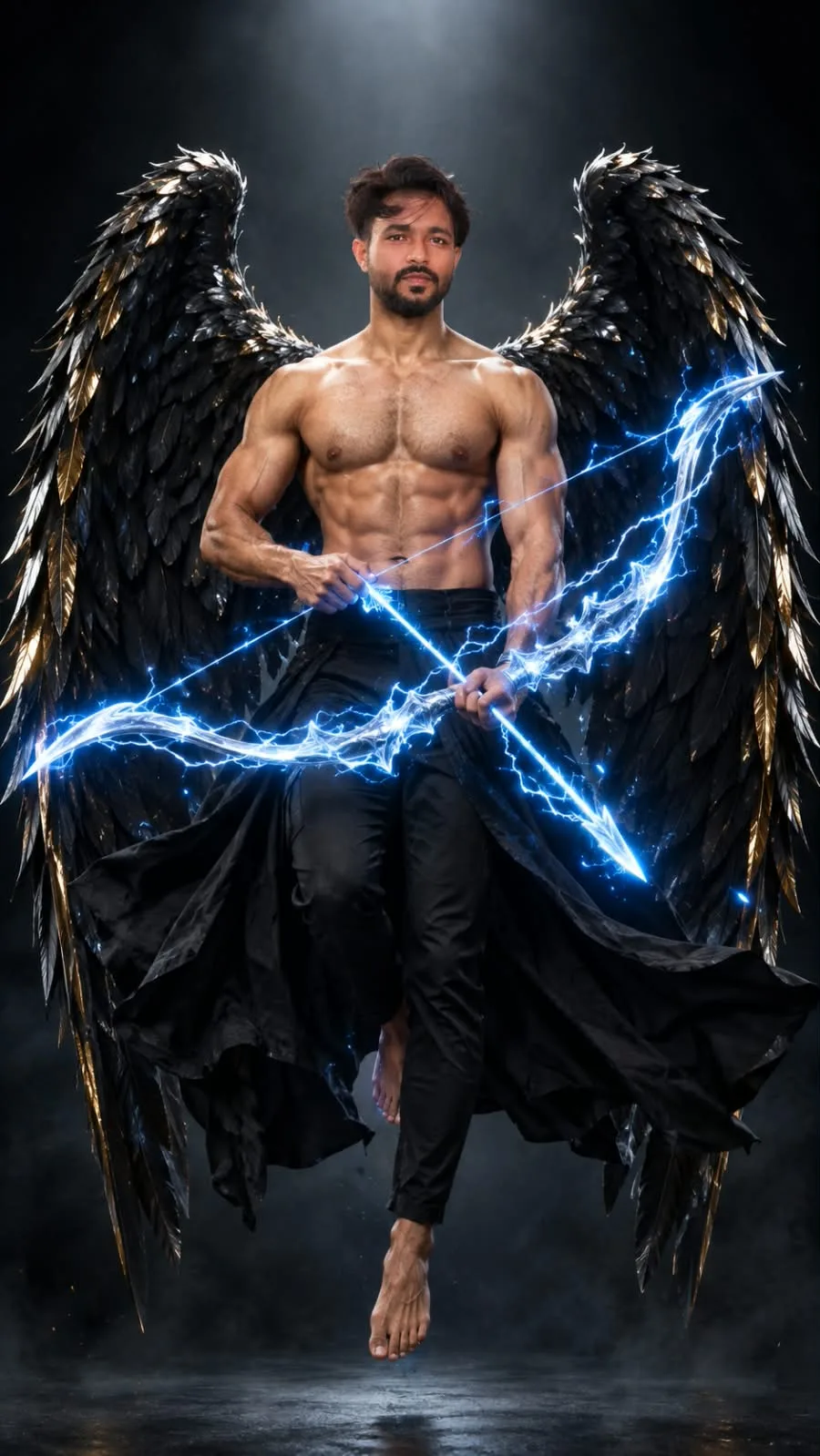
Dark angle
Create an ultra-photorealistic 4K UHD cinematic fantasy portrait, vertical 9:16, inspired closely by the uploaded reference image’s
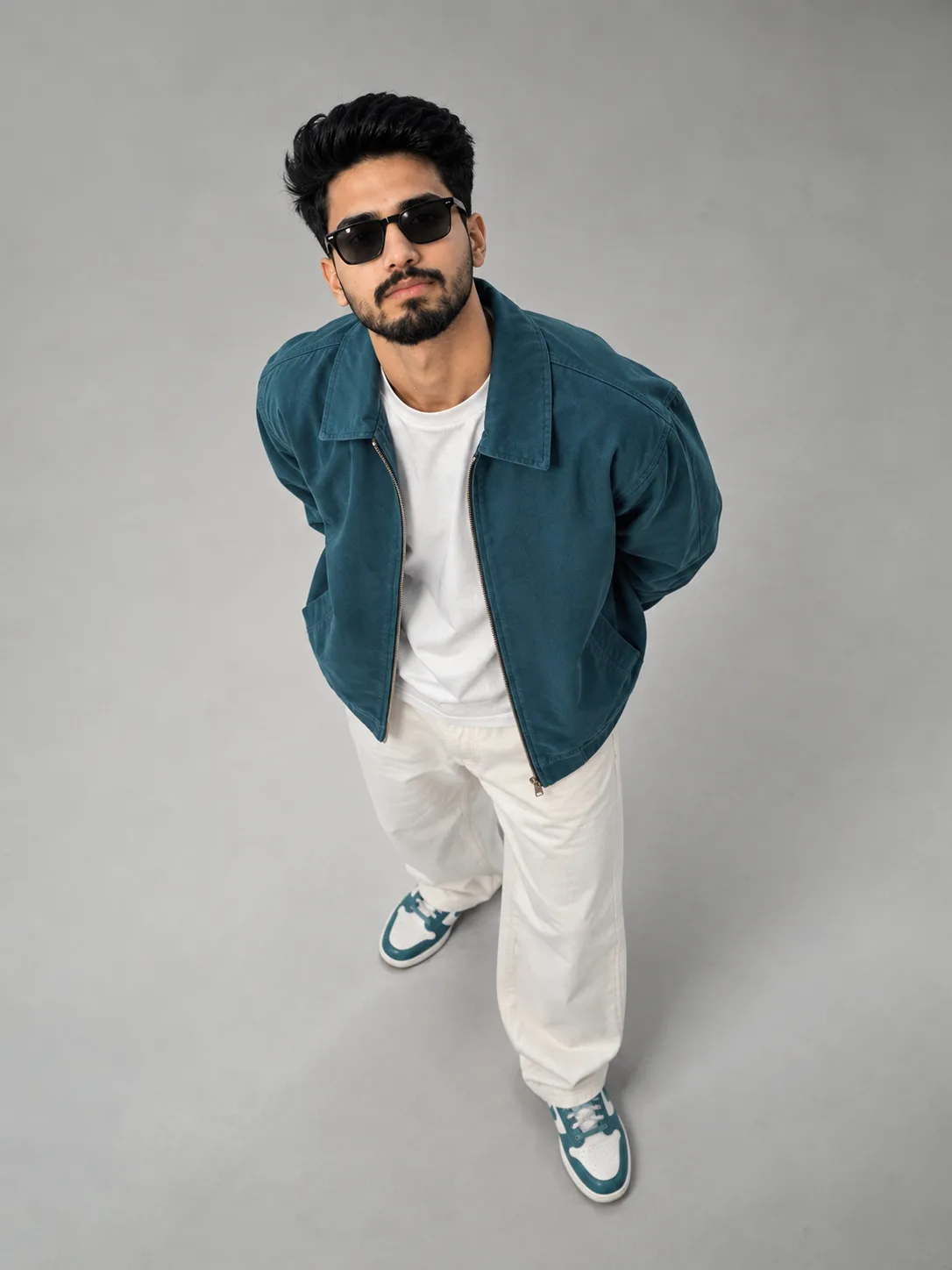
Stylish Top-down Angle Fashion Portrait
Create a hyper-realistic fashion editorial por-trait using my uploaded face reference.

Digital Marketing Made Easy for Gen Z
Create a modern, eye-catching Gen Z digital marketing social-media poster in a clean editorial style.
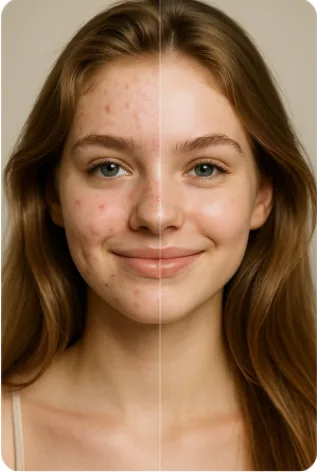
Natural Skin Restoration — Before & After
Create a highly realistic before-and-after facial skin restoration portrait using the uploaded image as the exact reference.
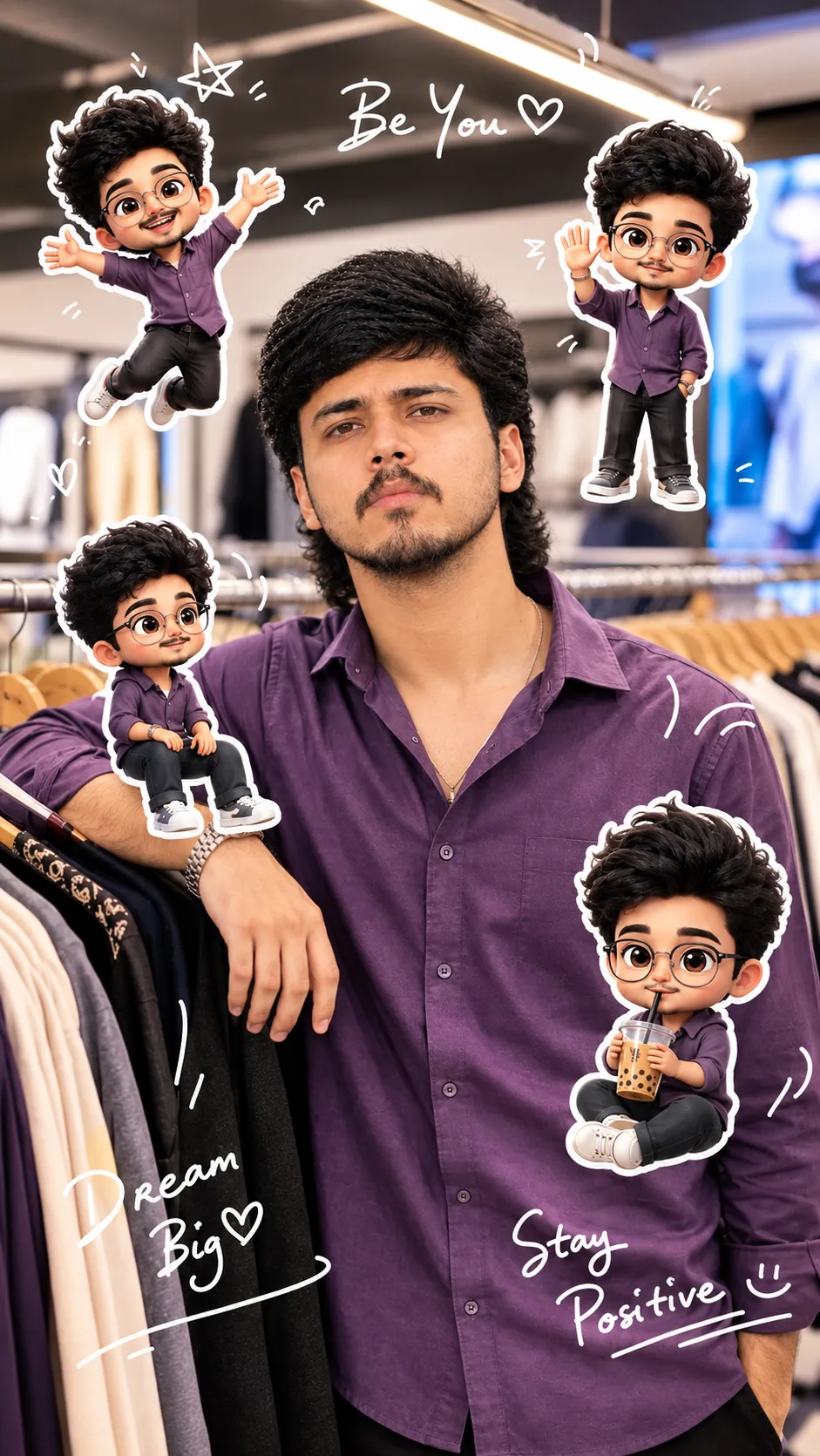
Be You – Dream Big, Stay Positive
Create a stylish ultra-realistic fashion portrait with playful 3D cartoon elements, inspired by the uploaded reference image.

Social Media Star – Viral Instagram 3D Portrait
Use the uploaded image as the visual reference for the overall composition, pose, lighting, and 3D social-media concept.